Aqua therapy
Aquatic Therapy Versus Gym Exercise for Recovery
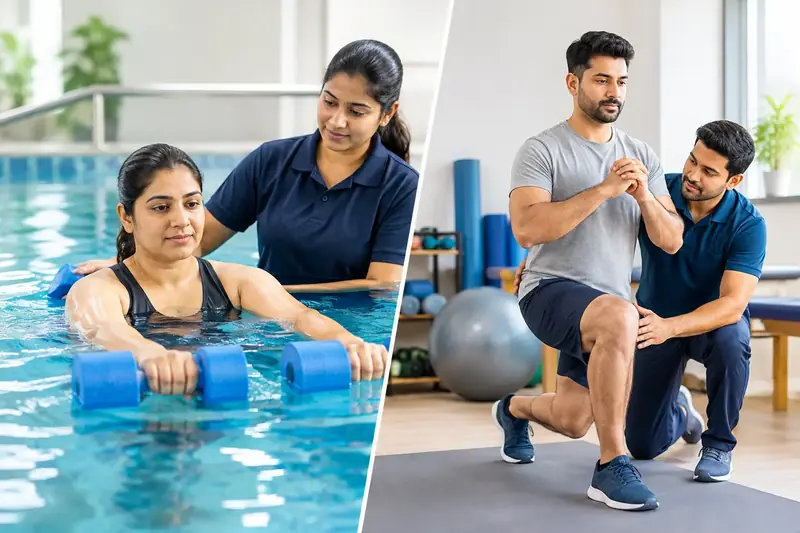
The question is rarely whether you should exercise at all. After a knee injury, back pain flare, surgery, or a long period of inactivity, the real question is: what kind of movement can help you rebuild without leaving you more sore, guarded, or afraid to move tomorrow? Aquatic therapy versus gym exercise is not a contest with one winner. Each can serve a different purpose in a well-planned recovery.
For some people, water creates the first comfortable chance to walk, squat, lift an arm, or practice balance again. For others, land-based exercise is the essential next step for returning to stairs, work demands, sports, and everyday routines. The right choice depends on your symptoms, healing stage, goals, and movement quality.
Why the setting changes the exercise
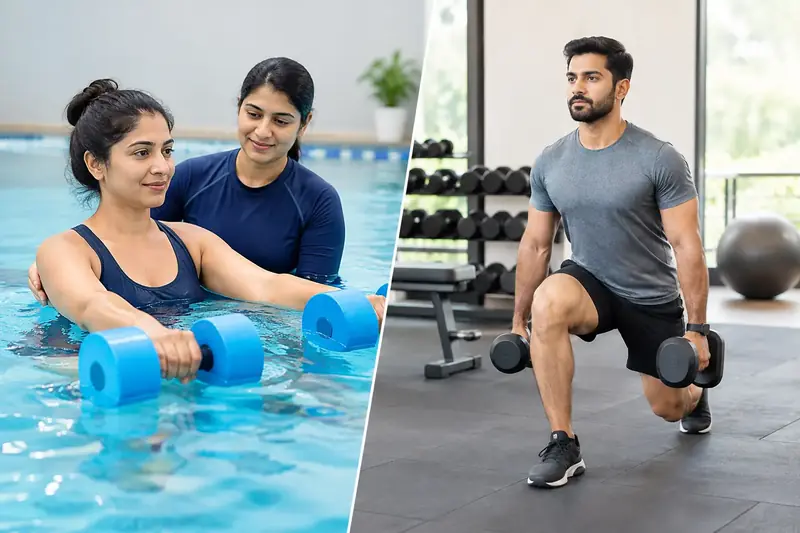
Exercise in a pool and exercise in a gym may look similar from the outside. You may be walking, strengthening your legs, moving your shoulders, or practicing balance in either place. Your body experiences those movements very differently.
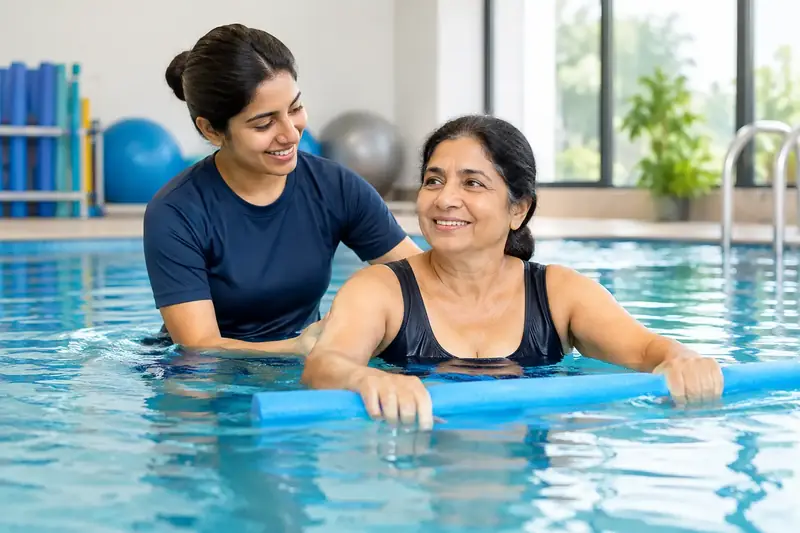
Water provides buoyancy, which reduces how much body weight your joints need to carry. Chest-deep water can make walking and lower-body exercises feel far more manageable for someone recovering from joint pain, a fracture, surgery, or deconditioning. The water also provides gentle resistance in every direction, so even controlled movements can challenge muscles without heavy weights.
A gym or clinic exercise space gives you a stable, predictable surface. That matters because daily life happens on land. Standing from a chair, climbing steps, carrying groceries, getting in and out of a car, and returning to a favorite sport all require your body to manage gravity, ground reaction forces, and real-world balance demands.
Neither environment is automatically better. They simply place different demands on the body.
Aquatic therapy versus gym exercise: key differences
Aquatic therapy is structured rehabilitation in water, guided by a physiotherapist around specific functional goals. It is not the same as swimming laps or joining a general pool fitness class. The exercises, water depth, pace, and progression should reflect what you are recovering from and what you need to return to.
Gym exercise can also be highly therapeutic when it is individualized. A rehabilitation plan may use bodyweight movements, resistance bands, machines, free weights, balance drills, walking practice, or mobility work. The focus is not on how hard the session looks. It is on performing the right movements with the right amount of challenge.
When water may offer an earlier starting point
Aquatic therapy can be especially useful when pain, swelling, weakness, or fear of falling makes land exercise difficult. Reduced loading often allows people to begin moving sooner and with better form. Someone with painful knee arthritis, for example, may be able to practice walking patterns and leg strengthening in water before tolerating the same volume on land.
Water can also support people after orthopedic surgery or a period of limited activity, once their surgeon and physiotherapist agree it is appropriate. For a person who has lost confidence after a fracture or joint procedure, the pool can offer a more supported environment for retraining gait, range of motion, and basic strength.
The resistance of water is another advantage. It adapts to your effort. Move slowly and the resistance is gentle. Move faster or use equipment designed for pool exercise, and the challenge increases. This can help rebuild shoulder, hip, trunk, and leg strength while avoiding the sudden impact associated with some land-based exercises.
When gym exercise becomes essential
Water reduces load, but it cannot fully prepare you for the load of normal life. If your goal is to return to climbing stairs without holding the railing, lifting a child, carrying a work bag, or running on a court, you eventually need carefully progressed land-based training.
Gym exercise is often more specific for building heavier strength, improving bone loading, and preparing for higher-level tasks. After a ligament injury, for instance, a person may begin with supported movement and then gradually need controlled squats, step-ups, single-leg balance, directional changes, and strength work that mirrors the demands of their activity.
Land training is also valuable for people with back or neck pain. A therapist can use it to retrain posture, hip and trunk strength, lifting mechanics, and endurance for desk work or household tasks. The goal is not to avoid every uncomfortable sensation. It is to help your body tolerate useful movement again, safely and progressively.
The trade-offs patients should understand
Aquatic therapy is lower impact, but lower impact is not the same as easy. Water can be tiring, especially when you are rebuilding fitness. It may not suit everyone, including people with certain open wounds, uncontrolled medical conditions, active infections, or specific concerns that need medical clearance. Pool access and comfort in water also matter.
Gym exercise can be convenient and highly adaptable, but it may be too demanding too early if pain is high, weight-bearing is restricted, or movement is significantly limited. Pushing through poor form to meet a workout target can reinforce compensation patterns rather than restore healthy movement.
There is also a common misunderstanding on both sides. Pool exercise is not automatically gentle enough for every injury, and gym exercise is not automatically unsafe after pain or surgery. The dose matters. Too much range, resistance, repetition, or intensity can irritate symptoms in either setting. Too little challenge, on the other hand, may not create the strength and confidence needed for recovery.
A blended approach often makes the most sense
For many patients, the strongest plan is not aquatic therapy or gym exercise. It is a progression between them.
A person recovering from knee replacement may start with supported walking, knee motion, and gentle strengthening in water when land-based movement is uncomfortable. As swelling settles and control improves, the program can shift toward sit-to-stands, step practice, balance training, and progressive resistance on land. The pool remains useful for conditioning or symptom-friendly exercise, while the gym work develops the capacity needed for daily life.
The same principle applies to sports injuries. A runner with a painful tendon or ankle sprain may use water for early cardiovascular fitness and controlled leg movement while impact is limited. Later, land-based strength, hopping, agility, and running drills become necessary before return to sport.
This is function-first rehabilitation: choosing the setting that helps you do the next meaningful thing, then progressing when your body is ready. The measure of progress is not only less pain. It may be walking farther, sleeping more comfortably, reaching overhead, returning to work, or trusting your balance again.
How to choose the right starting point
Start with an assessment rather than a preference for the pool or the gym. A physiotherapist should look at your diagnosis, healing restrictions, pain behavior, strength, mobility, walking pattern, balance, and the activities you need to return to. A plan for a desk worker with neck pain will not look like a plan for someone recovering from an ACL injury or hip surgery.
Consider aquatic therapy first if land movement is currently painful or heavily restricted, you have marked weakness or reduced confidence with weight-bearing, or you need a lower-impact way to restore mobility and conditioning. Consider land-based exercise as the priority if you are ready to build practical strength, tolerate everyday loading, improve balance on firm ground, or prepare for work and sport demands.
At PhysioRebound, this choice is guided by what you need to do outside the session. That may mean beginning in the water to make movement possible, then rebuilding the land-based strength and control that supports an independent, active life.
What a safe progression feels like
A good rehabilitation session should challenge you without creating a major symptom spike that lasts for days. Mild muscular effort, temporary stiffness, or fatigue can be expected when rebuilding capacity. Sharp pain, swelling that noticeably increases, giving way, new numbness, dizziness, or a significant decline in function deserves attention from your clinician.
Progress is also rarely perfectly linear. A busy week, poor sleep, a long commute, or doing more than usual at home can affect symptoms. Rather than seeing this as failure, use it as useful information. Your program can be adjusted so that it continues to build capacity without overwhelming your current tolerance.
The best exercise environment is the one that meets you where you are and moves you toward where you need to be. Water may help you begin. Land-based training may help you return. With the right progression, both can help you move, recover, and rebound with greater confidence.
Want a plan for your own recovery?
Book an assessment with Dr. Neha Mittal, MPT (Neurology), in Sector 104, Mohali.
This guide is general information, not a diagnosis. See the medical disclaimer.