Aqua therapy
Aqua Therapy: Rebuild Movement With Less Pain
When walking feels unsteady, a knee will not tolerate a full workout, or lifting an arm still brings discomfort after surgery, the usual advice to “exercise more” can feel unrealistic. Aqua therapy offers a different starting point: guided rehabilitation in water, where movement can be practiced with less impact and more support.
For many people, the goal is not simply to move in a pool. It is to get out of a chair more easily, walk with greater confidence, climb stairs, return to work, sleep with less discomfort, or begin rebuilding strength after a long period of inactivity. Water can make those early steps feel more possible while keeping the treatment focused on real-life function.
What Is Aqua Therapy?
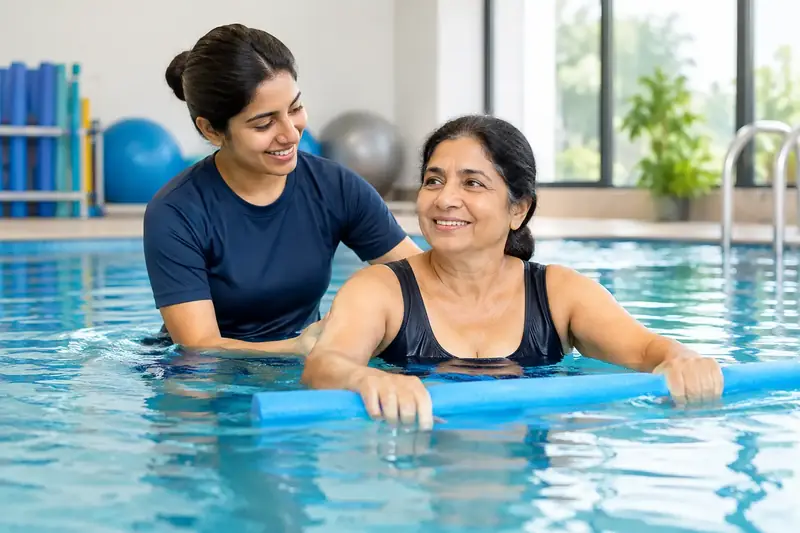
Aqua therapy, also called aquatic physiotherapy or hydrotherapy, is a structured form of rehabilitation exercise performed in a pool under the guidance of a qualified physiotherapist. It is not a casual swim session or a generic water aerobics class. Your program is selected and progressed according to your injury, surgery, pain level, mobility, balance, and functional goals.
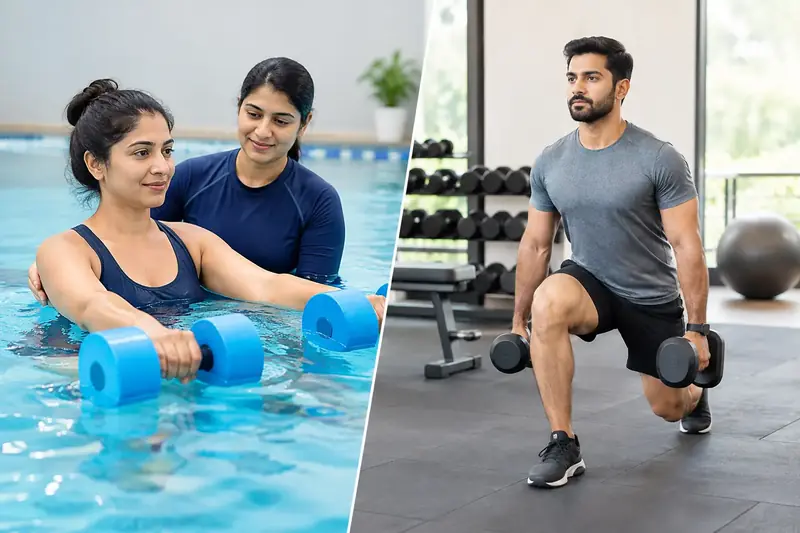
Water changes how the body moves. Buoyancy reduces the amount of body weight passing through painful or healing joints. This can make it easier to practice walking, squatting, reaching, stepping, and balance activities before those movements are comfortable on land. At the same time, water provides gentle resistance in every direction, allowing muscles to work without relying only on weights or high-impact exercise.
Warm water may also help some people feel less stiff and more relaxed during movement. That can be particularly useful when pain, guarding, or fear of falling has led to reduced activity. The benefit does not come from water alone, however. It comes from using the right movements, at the right stage, with a clear plan for returning to land-based function.
When Aqua Therapy May Help
Aqua therapy can be a useful part of rehabilitation for people whose symptoms make land exercises difficult to begin or progress. It is often considered after orthopedic surgery, fractures, joint replacement, sports injuries, back or neck pain, knee pain, arthritis-related stiffness, and periods of reduced mobility.
After a knee or hip procedure, for example, reduced weight-bearing in water may allow earlier practice of gait, controlled leg movement, and basic strengthening. For someone with a painful shoulder, the support of water can make it easier to begin range-of-motion exercises without forcing through sharp discomfort. For people recovering from an accident or a long hospital stay, the pool may offer a more reassuring setting to retrain balance and endurance.
It can also help adults who have become less confident on their feet. If a person has stopped walking outdoors, avoids stairs, or holds onto furniture at home, rebuilding confidence is as important as rebuilding muscle strength. A physiotherapist can use supported standing, weight shifting, step practice, turning, and walking drills to address both.
Aqua therapy is not automatically the best choice for every condition. Some people need focused hands-on treatment, land-based strengthening, or a gradual walking program first. Others may need medical clearance before entering a pool. The right approach depends on the cause of symptoms, wound healing, overall health, and the movement goals that matter most to you.
Why Water Can Make Early Rehabilitation Easier
The main advantage of water is not that it removes all challenge. It changes the challenge. When the body is partly supported by buoyancy, joints and healing tissues may tolerate movement that feels too demanding on land. This gives patients an opportunity to practice useful patterns rather than avoiding them completely.
Water resistance also adapts to effort. Move slowly and the resistance is light. Move faster or use a larger range of motion and the resistance increases. This allows exercises to be adjusted without immediately adding heavy loads. A therapist may use this to retrain leg strength, trunk control, shoulder stability, or walking mechanics in a controlled way.
The pool environment can be especially valuable when fear is limiting recovery. A person recovering from a fall may hesitate to shift weight onto one leg. Someone after surgery may be afraid that bending the knee will cause harm. With safe supervision and an individualized plan, water can provide a lower-impact place to practice those movements and gradually restore trust in the body.
That said, water is not a substitute for land. Daily life happens on floors, stairs, sidewalks, and uneven surfaces. The strongest aqua therapy plans use the pool as a bridge, then carry improved movement, strength, and confidence into land-based rehabilitation.
What a Session May Look Like
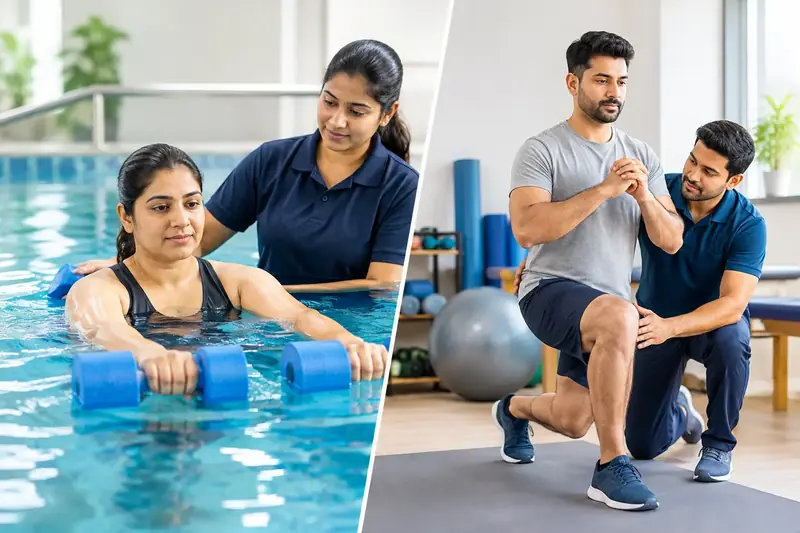
A useful program begins before anyone enters the water. Your physiotherapist first assesses the problem: how you walk, where movement is limited, which tasks cause pain, how strong and steady you are, and what you need to return to. A person preparing to resume office work may need a different plan from a recreational athlete returning after an ankle ligament injury.
Early sessions may focus on getting comfortable in the pool, gentle mobility work, supported walking, and controlled weight shifts. As symptoms settle and movement improves, exercises may progress to step-ups, squats, single-leg control, reaching tasks, core stability, resistance work, and endurance training.
The final phase should connect directly to daily activity. If your goal is to manage stairs at home, your program should build the strength and control required for stairs. If you want to return to sport, it should prepare you for the specific demands of running, stopping, turning, or jumping. If you are recovering from shoulder surgery, the focus may be on reaching, carrying, dressing, and eventually stronger overhead movement.
At PhysioRebound, aqua therapy is used as a clinically purposeful complement to rehabilitation, not as a stand-alone pool routine. Progress is guided by how you move and function outside the water, not simply by how many exercises you can complete in it.
Who Should Wait or Seek Clearance First?
Pool-based rehabilitation needs appropriate screening. Open wounds, unhealed incisions, active infections, uncontrolled seizures, severe heart or breathing conditions, fever, and certain skin conditions may mean aqua therapy should be delayed or require medical guidance. New or worsening swelling, calf pain, chest pain, dizziness, or unusual shortness of breath should always be assessed promptly rather than exercised through.
People with diabetes, blood pressure concerns, urinary or bowel continence issues, significant balance problems, or a history of falls may still be able to participate, but the plan and supervision should be adapted. Privacy, safe entry and exit from the pool, water depth, and fatigue levels all matter.
If you have recently had surgery, do not assume that being in water is safe simply because the exercise feels gentle. Your surgeon’s instructions and the status of wound healing are part of the decision. A physiotherapist can help coordinate a progression that protects healing tissues without allowing unnecessary loss of mobility and strength.
How to Get More From Aqua Therapy
The best results usually come from consistency and clear goals. Tell your therapist what has become difficult: getting in and out of a car, standing through a work shift, carrying groceries, sleeping comfortably, or keeping up with family. These details turn treatment into a plan for the life you want to return to.
Wear comfortable swimwear, bring water to drink, and expect some effort. Pool exercise may feel easier on the joints, but it can still challenge muscles and stamina. Mild post-exercise fatigue can be normal when returning to activity. Sharp pain, lasting flare-ups, unusual swelling, or increasing instability are signals to adjust the program.
A home exercise plan is often part of the process as well. Small, regular land-based exercises help transfer progress from the pool to everyday movement. As you become stronger, the balance of treatment may shift toward land work, walking practice, functional strengthening, and the specific activities you need to resume.
Recovery does not have to begin with the hardest version of an exercise. For the right person, water can provide a supported place to restore movement, rebuild strength, and take the next practical step toward feeling capable on land again.
Want a plan for your own recovery?
Book an assessment with Dr. Neha Mittal, MPT (Neurology), in Sector 104, Mohali.
This guide is general information, not a diagnosis. See the medical disclaimer.