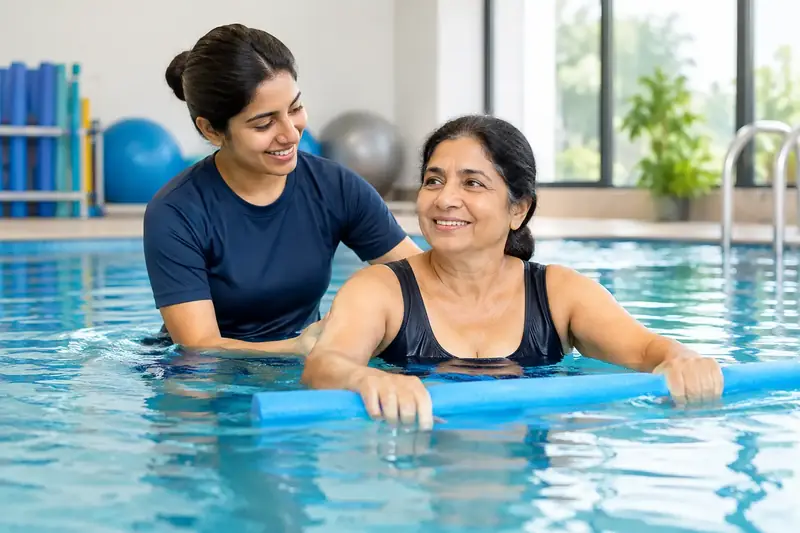
Aqua therapy
Aqua Therapy Versus Land Physiotherapy for Recovery

Getting out of a chair without bracing for pain, climbing stairs with control, or reaching overhead to dress can feel like major milestones during recovery. When comparing aqua therapy versus land physiotherapy, the right choice is not simply about where you exercise. It is about choosing the setting and progression that helps you restore the movements your daily life requires.
Water can make movement feel more achievable when a joint is painful, stiff, or not yet ready for full loading. Land-based rehabilitation is where many people rebuild the strength, balance, coordination, and confidence needed for real life. For some people, one approach is clearly more suitable. For many, the most effective plan uses both at different points in recovery.
Aqua Therapy Versus Land Physiotherapy: The Main Difference
Aqua therapy is structured physiotherapy performed in a therapeutic pool under clinical guidance. It is not simply swimming or general water exercise. The warmth, buoyancy, and resistance of water are used deliberately to support specific rehabilitation goals.
Buoyancy reduces the amount of body weight passing through the spine, hips, knees, ankles, and feet. This can make walking practice, squats, shoulder movements, and early strengthening more comfortable for someone with arthritis, a recent injury, post-surgical limitations, or significant pain. Water resistance also provides gentle resistance in every direction, allowing muscles to work without the impact of jumping, running, or heavy weights.
Land physiotherapy takes place on a stable surface and is designed around the movements you need outside the pool. It may include hands-on treatment, mobility work, targeted exercises, balance retraining, walking practice, strength training, and return-to-work or return-to-sport drills. Because daily life happens on land, this setting is essential for preparing you to manage stairs, uneven ground, lifting, turning, reaching, and getting up from the floor.
Neither approach is automatically better. The better choice depends on your diagnosis, healing stage, pain level, movement confidence, medical history, and functional goal.
When Aqua Therapy Can Be Especially Helpful
Water can provide a valuable starting point when land exercises feel too painful or intimidating. Someone recovering from a knee replacement, a fracture after immobilization, or a flare of back pain may be able to begin moving more freely in the pool before they can tolerate the same activity on land.
Aqua therapy is often useful for people who have joint pain related to osteoarthritis, hip or knee problems, persistent back pain, reduced walking tolerance, or deconditioning after a period of inactivity. It can also support early rehabilitation after orthopedic procedures when a surgeon and physiotherapist agree that pool-based activity is appropriate.
The pool can help reduce fear of movement. After a fall, accident, painful injury, or surgery, people often guard the affected area and avoid loading it. This is understandable, but prolonged avoidance can lead to greater stiffness, weakness, and reduced confidence. In water, the body feels lighter and falls are less of a concern, giving many patients a safer-feeling environment in which to practice stepping, weight shifting, and controlled movement.
That said, aqua therapy is not a shortcut around rehabilitation. A patient still needs purposeful exercise, correct technique, and progression. The therapist may use the pool to improve range of motion, begin muscle activation, retrain gait, or build tolerance for movement. As ability improves, the program should continue to move toward practical land-based tasks.
Why Land Physiotherapy Remains Essential
A pool can reduce load, but it cannot fully reproduce the demands of standing and moving on solid ground. Land physiotherapy helps your body adapt to those demands in a measured way.
For example, if your goal is to return to office work without neck and shoulder pain, your plan may include posture retraining, upper-back strength, desk-specific movement habits, and gradual overhead reaching. If you are recovering from an ankle sprain and want to return to running, you will need progressive calf and hip strength, balance on one leg, hopping control, and sport-specific drills. These tasks are best practiced on land.
Land rehabilitation is also particularly important for bone health, functional strength, and balance. Your muscles and nervous system must learn to control your body weight while dealing with gravity. This is necessary for carrying groceries, getting in and out of a car, navigating curbs, walking on uneven surfaces, and responding safely if you lose your balance.
For patients with sports injuries, ligament injuries, or goals involving high-demand activity, land physiotherapy usually becomes the central part of recovery. Aqua therapy may still help manage early pain or maintain conditioning, but a safe return to sport requires progressively loading the tissues in the way the sport demands.
The Trade-Offs to Consider
Aqua therapy can make exercise more tolerable, but it is not suitable for everyone. Open wounds, uncontrolled medical conditions, active infections, certain skin conditions, severe water anxiety, and some cardiac or respiratory concerns may require postponing or avoiding pool treatment. A thorough assessment should come first.
Pool access also matters. Travel, changing facilities, and the physical effort of entering or exiting a pool can be challenging for some people, particularly soon after surgery. In these cases, clinic-based, home-based, or online-guided land exercises may be more practical and easier to continue consistently.
Land physiotherapy can feel harder at the beginning because the injured area is exposed to normal body weight and gravity. But discomfort is not always a sign that treatment is wrong. A skilled physiotherapist helps distinguish between expected effort during recovery and pain that signals the need to adjust the plan.
The key is not to choose the gentlest treatment forever. It is to choose the right amount of challenge for your current ability, then progress it safely.
How a Function-First Plan Uses Both
The strongest rehabilitation programs begin with an assessment, not a preset package of exercises. Your physiotherapist should understand what happened, how symptoms behave, what movements are limited, and what you need to return to. A goal such as “reduce knee pain” is useful, but “walk through the market for 30 minutes, manage stairs at home, and sleep without aching” gives treatment a clearer direction.
A person with painful knee arthritis may begin with aqua therapy to improve walking tolerance and leg strength with less joint compression. As pain settles and control improves, land exercises can build sit-to-stand ability, stair strength, balance, and confidence for community walking.
Someone recovering from shoulder surgery may initially need carefully protected land exercises to follow post-operative restrictions. Once cleared, water may help with gentle mobility and muscle activation. Later, land-based strengthening prepares the shoulder for lifting, reaching, work, and household activities.
For chronic back pain, the pool may allow comfortable movement during a sensitive phase, while land sessions retrain hip and trunk strength, lifting mechanics, and the endurance required for work or family responsibilities. The sequence is individual. Recovery should respond to your progress, not force you into a fixed timeline.
Questions to Ask Before Choosing
Before committing to aqua therapy or land treatment, ask what movement problem each approach is expected to address. You should also understand how progress will be measured. This may include walking distance, range of motion, strength, sleep comfort, stair climbing, work tolerance, or your confidence performing a previously difficult task.
Ask when the program will progress from supported movement to more functional loading. If water is part of the plan, ask how the gains made in the pool will carry over to land. If land exercise is painful, ask whether temporary pool-based work could help you stay active while symptoms settle.
At PhysioRebound, treatment is built around this progression: assess the problem, reduce barriers to movement, rebuild mobility and strength, retrain practical function, and help you return to the activities that matter to you. The aim is not only to feel better during a session. It is to move with more control when you are at home, at work, on the stairs, or back in the activities you enjoy.
The best next step is an individual assessment that looks beyond the painful area. With the right level of support and challenge, recovery can move from protecting your body to trusting it again.
Want a plan for your own recovery?
Book an assessment with Dr. Neha Mittal, MPT (Neurology), in Sector 104, Mohali.
This guide is general information, not a diagnosis. See the medical disclaimer.