Knee & ankle
What Knee Swelling Causes May Be Telling You
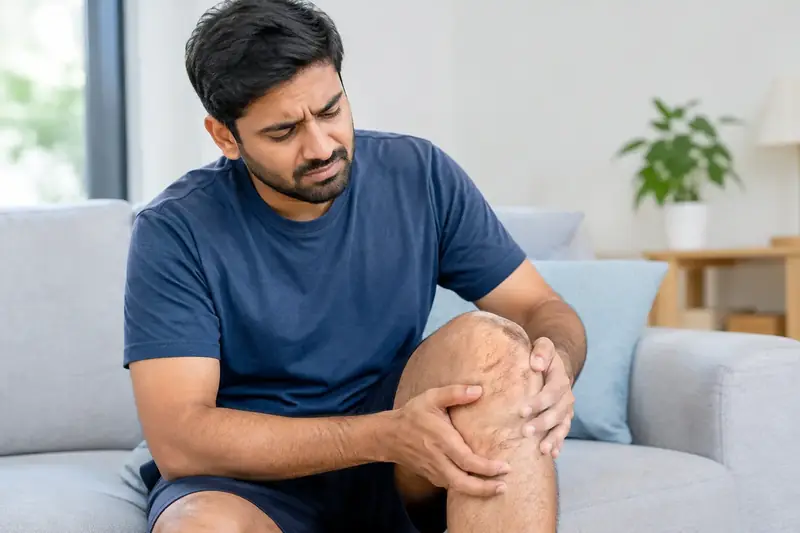
A knee that suddenly feels tight, looks puffy, or will not bend as easily can make ordinary tasks feel uncertain. Stairs become harder, getting out of a chair takes more effort, and even a short walk may feel unsteady. Knee swelling causes range from a minor strain to a joint condition that needs prompt medical attention, so the pattern of symptoms matters as much as the swelling itself.
Swelling is not a diagnosis. It is the body’s response to irritation, injury, inflammation, or extra fluid inside or around the joint. Understanding what may be driving it can help you choose the right next step: rest and monitoring, a medical assessment, or a structured rehabilitation plan to rebuild strength and confidence.
Knee Swelling Causes: Injury, Irritation, and Joint Changes
The knee is a complex working joint. Bones, cartilage, ligaments, tendons, muscles, and fluid-filled structures all need to move together. When one of these tissues is overloaded or damaged, the joint may produce extra fluid as a protective response. This is often called an effusion, or fluid on the knee.
A twist, fall, or direct impact
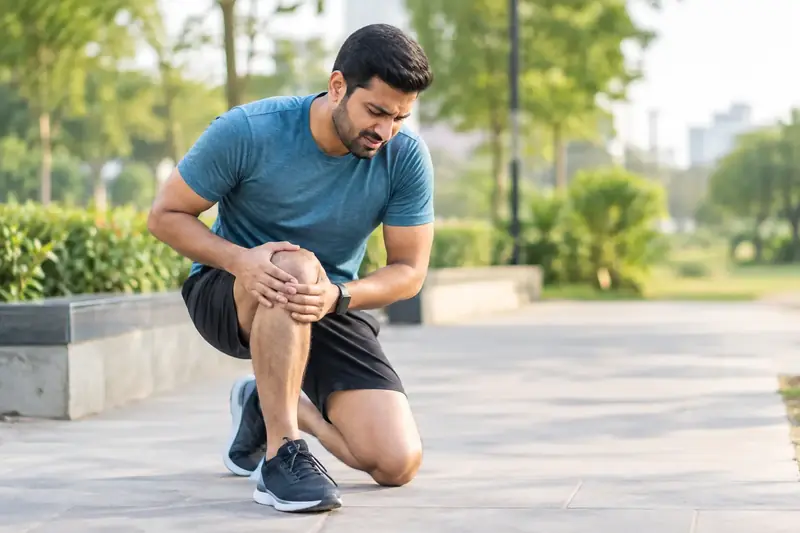
A sudden injury is a common reason for noticeable swelling. You may twist your knee while playing a sport, step awkwardly off a curb, fall, or receive a direct blow. Ligament sprains, meniscus tears, tendon injuries, and fractures can all cause swelling.
The timing can offer a useful clue. Swelling that appears quickly, within a few hours of a significant injury, can occur with bleeding or substantial irritation inside the joint. Swelling that develops more gradually over the next day may be related to a meniscus injury, a mild ligament sprain, or an overuse reaction. These patterns are not enough to diagnose the problem alone, but they help guide assessment.
A knee that gives way, locks, cannot fully straighten, or feels unstable deserves particular attention. Continuing to push through these symptoms can change how you walk and place extra stress on the hips, ankle, and other knee.
Overuse and training changes
Not every swollen knee follows one memorable incident. A rapid increase in walking, running, squatting, cycling, climbing stairs, or physically demanding work can irritate joint tissues over time. This is especially common when activity increases faster than strength, mobility, and recovery capacity can adapt.
For example, returning to weekend sports after a long break may overload the knee even if there was no single twist or fall. The same can happen after a period of bed rest, illness, travel, or surgery, when leg muscles have become weaker. The knee may swell after activity, feel stiff the next morning, or become sore during repeated bending.
The answer is not always complete rest. Too much inactivity can make the joint stiffer and the supporting muscles less capable. A better approach is often temporary load reduction followed by a gradual return to movement that the knee can tolerate.
Osteoarthritis and age-related joint changes
Osteoarthritis is another frequent cause of recurring knee swelling, particularly in adults over 45, people with previous knee injuries, and those whose work or sport involves years of repetitive loading. In osteoarthritis, the joint’s cartilage and surrounding tissues change over time. The knee may become painful, stiff after sitting, swollen after a busy day, or less comfortable on stairs.
Symptoms can vary widely. Some people have clear X-ray changes with manageable discomfort, while others have significant pain and reduced function with less obvious imaging findings. Your daily experience matters: how far you can walk, whether you can sleep comfortably, how safely you manage stairs, and whether you can keep up with work and family routines.
Rehabilitation cannot reverse every structural change, but it can improve how the joint works. Building leg strength, improving balance, restoring comfortable range of motion, and managing activity load can reduce strain on an irritated knee.
Inflammatory conditions and crystal flare-ups
Some forms of knee swelling are driven by inflammation rather than an obvious injury. Rheumatoid arthritis and other inflammatory joint conditions can cause warmth, swelling, prolonged morning stiffness, and symptoms in more than one joint. These conditions need medical evaluation and may require medication alongside physiotherapy.
Gout can also affect the knee, although it is more commonly recognized in the big toe. A gout flare may cause sudden, intense pain, warmth, redness, and swelling. Pseudogout, caused by calcium crystal deposits, can produce similar symptoms. These flare-ups should not be mistaken for a routine sports injury.
Bursitis, tendon irritation, and infection
Swelling may sometimes sit in a more specific location rather than making the whole knee look enlarged. A soft swelling in front of the kneecap can occur with prepatellar bursitis, especially after frequent kneeling. Tendon irritation may cause pain and thickening just below or above the kneecap.
A hot, red, rapidly swelling knee with fever, chills, or a general feeling of illness needs urgent medical care. Joint infection is uncommon, but it can damage the joint quickly and should never be managed with home exercises alone. Seek urgent assessment as well if swelling follows a serious accident, the knee looks deformed, you cannot bear weight, or you have calf swelling and shortness of breath.
When Knee Swelling Needs Assessment
Mild swelling after an unfamiliar activity may settle with sensible load management. However, repeated swelling is your knee’s way of saying that something is not tolerating its current demands. An assessment is worthwhile if swelling lasts more than a few days, keeps returning, limits bending or straightening, or affects your walking, work, sleep, or exercise.
A clinician will consider how the problem began, where the swelling is located, what movements trigger it, and whether the knee feels stable. They may assess your gait, range of motion, strength, balance, and the way your hips, ankles, and feet influence knee loading. Imaging or medical referral may be appropriate when there is concern about a significant tissue injury, fracture, inflammatory condition, or infection.
Avoid trying to “work through” a swollen knee with deep squats, running, jumping, or aggressive stretching. Pain is not always a reliable measure of damage, but swelling after activity is useful feedback. It may mean the activity was too much, too soon.
What You Can Do While You Arrange Care
For a new, non-emergency flare-up, reduce the activities that clearly increase pain or swelling for a short period. Gentle movement within a comfortable range is usually preferable to holding the knee completely still. Elevating the leg when resting and using a cold pack wrapped in a towel for brief periods may help with comfort.
Compression can feel supportive for some people, but it should not cause numbness, tingling, color changes, or increasing pain in the foot. If you have circulation problems, altered sensation, or a medical condition that affects healing, ask a healthcare professional before using compression or cold therapy.
It can also help to note what changes the swelling. Does it increase after stairs, after sitting for long periods, or after a particular exercise? Does the knee feel warm, unstable, or stiff first thing in the morning? These details make an assessment more useful and help shape a plan around your real routine.
Rebuild Function, Not Just Comfort
Once serious causes have been ruled out, recovery should focus on more than making the swelling disappear for a day. The goal is to restore the knee’s ability to support your life: walking confidently, rising from a low chair, managing stairs, returning to work, or getting back to sport without constant worry.
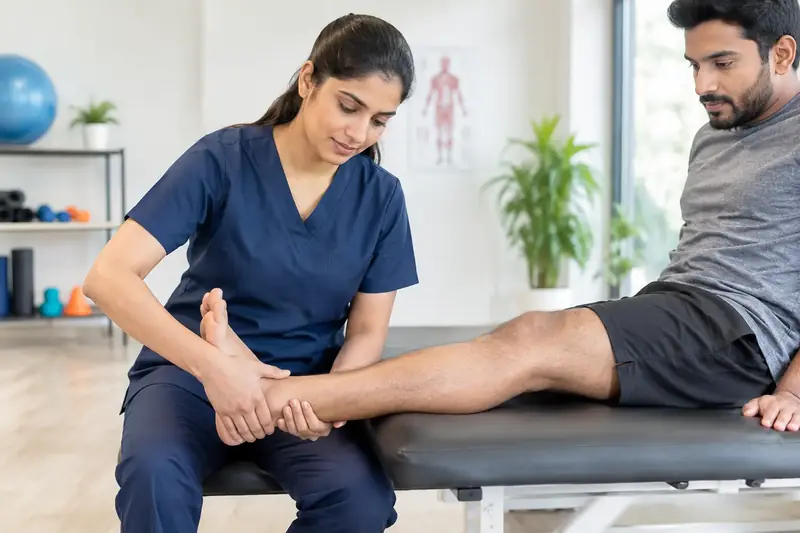
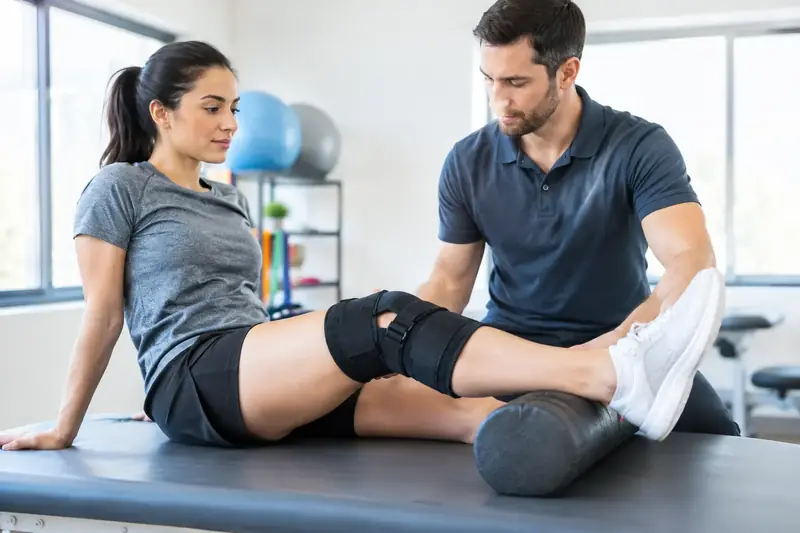
A physiotherapy plan is typically progressed in stages. Early care may focus on settling irritation, restoring comfortable movement, and finding safe ways to stay active. As symptoms improve, targeted strengthening for the quadriceps, hamstrings, calves, and hip muscles helps the knee share load more effectively. Balance, coordination, and movement retraining become especially valuable after injury or when the knee has felt unreliable.
For some people, lower-impact water-based rehabilitation can be a useful bridge between limited movement and land-based exercise. The water reduces joint loading while allowing walking, controlled strengthening, and confidence-building movement. The best option depends on the cause of swelling, your medical history, and the functional goals you want to return to.
At PhysioRebound, treatment is guided by the question that matters most: what do you need your knee to help you do again? A clear assessment and progressive plan can turn that answer into practical steps.
Your knee does not need to be perfect before you begin moving forward. It needs the right level of protection, the right explanation for what is happening, and a gradual path back to the activities that make your day feel like your own.
Want a plan for your own recovery?
Book an assessment with Dr. Neha Mittal, MPT (Neurology), in Sector 104, Mohali.
This guide is general information, not a diagnosis. See the medical disclaimer.