Back & neck
How to Manage Sciatica and Move With Confidence

A sharp pain from the low back into the buttock or leg can make ordinary tasks feel uncertain. Sitting through a work meeting, getting out of a car, climbing stairs, or sleeping comfortably may suddenly require planning. Learning how to manage sciatica starts with more than trying to quiet the pain. It means understanding what is aggravating the nerve, keeping your body moving in the right ways, and rebuilding confidence in the activities that matter to you.
Sciatica often improves with a structured, active approach, but the best plan depends on your symptoms, your daily demands, and the underlying cause. There is no single stretch, exercise, or posture that helps everyone.
What sciatica feels like and why it happens
Sciatica describes pain caused by irritation or compression of nerve roots in the lower back that contribute to the sciatic nerve. The pain may travel from the low back or buttock into the back or side of the thigh, calf, or foot. Some people notice burning, tingling, numbness, or a feeling of weakness in the leg.
A disc bulge, age-related changes in the spine, narrowing around the nerves, muscle irritation, or prolonged loading can all contribute. Sometimes symptoms begin after lifting, twisting, a long drive, or an increase in exercise. In other cases, they seem to appear without one clear trigger.
The severity of pain does not always tell you the severity of the problem. A very painful flare can settle well with appropriate care, while persistent numbness or weakness deserves timely assessment. The key question is not only, “Where does it hurt?” but also, “What can you no longer do comfortably or safely?”
Know when sciatica needs urgent medical attention
Most sciatic symptoms can be assessed through a routine appointment with a qualified clinician. However, seek urgent medical care if you develop new difficulty controlling your bladder or bowel, numbness around the groin or inner thighs, rapidly worsening leg weakness, or severe pain following a significant accident.
You should also arrange an assessment promptly if pain is constant and unrelenting, you have fever or unexplained weight loss, or symptoms are getting worse rather than gradually settling. These signs do not automatically mean something serious is wrong, but they should not be managed with home exercises alone.
How to manage sciatica without stopping your life
Complete bed rest can make the back and leg feel stiffer, weaker, and more sensitive. At the same time, forcing yourself through sharp, escalating pain can prolong a flare. The goal is to find a manageable middle ground: stay gently active, reduce movements that clearly aggravate symptoms, and build capacity gradually.
Use movement as a daily reset
Short, frequent walks are often more useful than one ambitious session. Start with a distance that does not significantly increase leg pain during the walk or leave you worse later that day. For some people, that is five minutes around the home. For others, it may be 15 minutes outside. Repeat it once or twice a day and increase slowly as symptoms allow.
Changing position regularly also matters. If sitting brings on pain, stand and walk briefly every 20 to 30 minutes. If standing aggravates symptoms, alternate it with supported sitting or a short lie-down. The “best” posture is usually the one you can change out of before pain builds.
Pay attention to whether symptoms move. Pain that becomes less intense in the leg and more centered around the buttock or back can be a positive sign for some people. Pain spreading farther down the leg, especially with increasing numbness or weakness, is a reason to scale back and seek advice.
Modify the task, not your entire routine
During an irritated phase, small adjustments can protect your confidence and keep you participating in daily life. When getting out of bed, roll onto your side first and push up with your arms rather than sitting straight up. When lifting, keep objects close, avoid twisting while carrying, and break heavier tasks into smaller loads.
For desk work, aim for movement variety rather than a perfect chair setup. Place frequently used items within easy reach, use support behind the low back if it feels comfortable, and take planned movement breaks. A standing desk may help one person but worsen symptoms for another, particularly if standing still is their trigger.
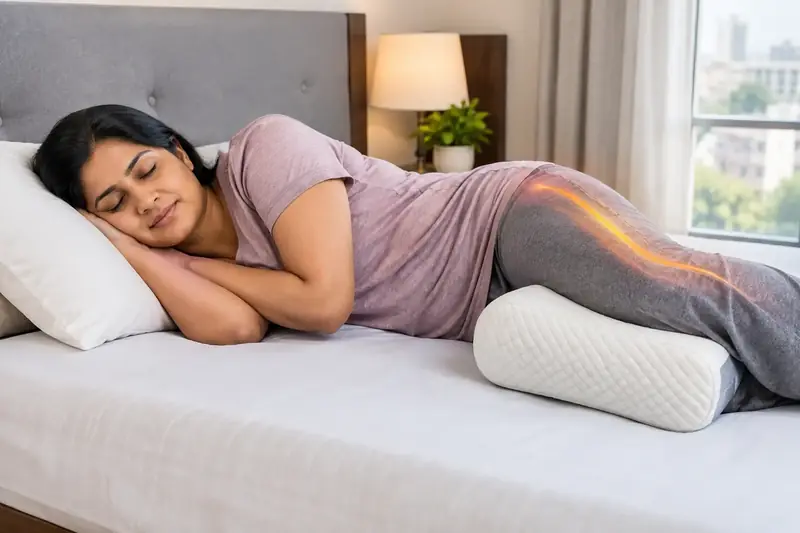
Sleep can also be difficult during a flare. Try a pillow between the knees when lying on your side, or under the knees when lying on your back. These positions are not cures, but they can reduce strain enough to help you rest. If a position increases leg symptoms, change it rather than trying to “push through.”
Choose exercises based on your response
Online sciatica exercises can be a useful starting point, but they are not a substitute for an individual assessment. Some people feel better with gentle backward-bending movements; others respond better to bending forward, hip mobility work, or nerve mobility exercises. The wrong approach can increase symptoms.
A physiotherapist can assess your walking, leg strength, reflexes, range of motion, and symptom behavior. From there, your program may include controlled spinal movement, hip and trunk strengthening, balance work, and graded return to lifting, walking, sport, or work duties. The purpose is not simply to collect exercises. It is to retrain the movements you need for your actual life.
Nerve mobility exercises, sometimes called nerve glides, should be gentle. They are designed to help the nerve move more comfortably through surrounding tissues, not to create a strong stretching sensation. Aggressive hamstring stretching or repeated toe-touching can irritate some cases of sciatica, especially early on.
Calm a flare without becoming fearful of pain
Heat or ice may offer temporary relief. Choose the option that feels better, use a protective layer between the pack and skin, and keep sessions brief. Some people find that a warm shower before light movement reduces stiffness, while others prefer a cold pack after an activity that has aggravated symptoms.
Over-the-counter medication may be appropriate for some adults, but it is not right for everyone. Check with a pharmacist or physician if you have kidney disease, stomach ulcers, heart conditions, take blood thinners, are pregnant, or use other medications. Medication may help you move and sleep more comfortably, but it works best alongside a plan to restore function.
Try not to let a pain flare become a message that your back is damaged or fragile. Pain is real, and it deserves attention, but it is also influenced by sleep, stress, workload, previous injuries, and how much your body has been asked to do recently. Calm, progressive movement is often more productive than avoiding every sensation.
Rebuild strength for the activities you want to return to
When severe symptoms begin to settle, rehabilitation should move beyond pain relief. This is where many people need support. Being able to walk around the house is different from returning to a full workday, picking up a child, driving long distances, playing badminton, or managing stairs without hesitation.
A progressive plan may begin with comfortable walking and basic trunk and hip control. It can then build toward squats, step-ups, carrying, balance tasks, and work- or sport-specific drills. The rate of progression depends on your baseline strength, your job demands, and whether symptoms remain stable after activity.
Expect recovery to be uneven. A temporary increase in discomfort after doing more does not always mean you have caused harm. What matters is the pattern: symptoms should settle within a reasonable time, not spread farther down the leg, and not cause new weakness. Tracking your walking tolerance, sleep, sitting time, and ability to complete everyday tasks can show progress that pain scores alone may miss.
At PhysioRebound, rehabilitation is built around these practical goals: moving more safely, rebuilding strength, and returning to the routines that make you feel independent. Care may include hands-on treatment when appropriate, but lasting progress comes from an assessment-led plan you can use between appointments.
Get support when self-management is not enough
Consider physiotherapy if leg pain is limiting work, sleep, walking, exercise, or confidence; if symptoms keep returning; or if you are unsure which movements are safe. A clear assessment can prevent the cycle of trying random exercises, resting too long, then flaring again when life demands more of you.
Recovery from sciatica is rarely about finding one perfect position or one magic exercise. It is about responding to your body, restoring movement step by step, and giving yourself a realistic path back to the things you need and enjoy doing. Start with the next manageable movement, then let consistency rebuild your confidence.
Want a plan for your own recovery?
Book an assessment with Dr. Neha Mittal, MPT (Neurology), in Sector 104, Mohali.
This guide is general information, not a diagnosis. See the medical disclaimer.